Today's Top Stories 1. LaFree: Terrorism is 'bursty' 2. DHS may place dams under CFATS-like regulation 3. ICE not instituting prosecutorial discretion, say immigration lawyers 4. FBI releases hate crime 2010 data 5. Pistole: Security clearance holders could get expedited airport security Also Noted: U.S. pressures Brits over 2012 Olympics security; German officials uncover right-wing extremist terrorist group; and much more... More News From the FierceGovernment Network: 1. EU agency warns of voluntary surveillance society 2. DHS: Stennis data center required $77 million in facility upgrades 3. The FierceGovernment complete collection of Dan Gordon memos Today's Top News
Also Noted> U.S. pressures Brits over 2012 Olympics security. Article (The Guardian) > TSA issues bus travel advisory but doesn't cite specific threat. Article (AP via WaPo) > Mexican government rules out sabotage in helicopter crash of interior minister. Article (Bloomberg) > ICE steps up voluntary employer immigration enforcement program. Article (Fox News Latino) > German officials uncover right-wing extremist terrorist group. Article (AP via WaPo) And Finally... Caught on tape: A pre-fame Stephen Colbert recorded this commercial for Nebraska Firs Tier Bank. Embedded video ©2011 FierceMarkets This email was sent to nbrauchitsch@yahoo.com as part of the FierceHomelandSecurity email list which is administered by FierceMarkets, 1900 L Street NW, Suite 400, Washington, DC 20036, (202) 628-8778. Refer FierceHomelandSecurity to a Colleague Contact Us Advertise Email Management Explore our network of publications: | ||||||||||||||||||||||||||||||
Monday, November 14, 2011
Fw: | 11.14.11 | Terrorism is 'bursty'


 Follow @fiercegov on Twitter


 The Homeland Security Department might propose legislation to place dams under a regulatory regime similar to chemical facilities, says the DHS office of inspector general.
 Prosecutorial discretion by Immigration and Customs Enforcement agents when it comes to deporting illegal aliens hasn't taken root, says a Nov. 9 report from the American Immigration Lawyers Association and the American Immigration Council.
 Holders of federal security clearances could become the next class of individuals to receive expedited treatment in Transportation Security Administration airport checkpoints.
Sunday, August 28, 2011
AIR TRAFFIC CONTROL
New Twitter
App Gets You Free Traffic.. Click Here To See How >>
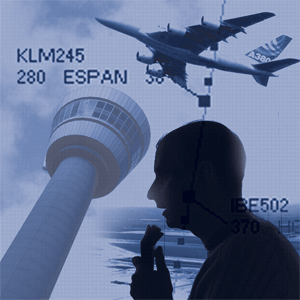 Image via Wikipedia
So Andy Rooney…would ask…Why do we need AIR TRAFFIC CONTROL ERS anyway???
AIR TRAFFIC CONTROL
Early History
To get a better appreciation of air traffic control, we have to look briefly into history. But we needn’t look back too far, for the Wright brothers took off (from Kitty Hawk in 1903, and commercial aviation itself as we know it today began seventy-six years ago in 1935. Aviation captured the public’s imagination during World War I when such as Von Richthofen, Fonck, Bishop, Ball, Luke, Rickenbacker and Lufbery roamed the skies of France. Following the war a series of spectacular flying feats brought many others to the attention of the public.
The NC-4 flew the Atlantic nonstop-about 1,700 miles in just under sixteen hours. Lieutenants Belvin Maynard and Alex Pearson flew coast to coast and back in little more than nine days. Significantly, a series of airfields had to be strung across the nation so they could land when fuel ran low. This was the first transcontinental airway. In 1922, Lieutenant James Doolittle flew from Florida to Texas and on to California in twenty-one hours. Then came other pioneers: Carl Spaatz, Ira Eaker, E. R. Quesada, H. A. Halversen, Richard E. Byrd, Floyd Bennett, Wiley Post, Harold Gatty, Amelia Earhart, Jacqueline Cochran, Howard Hughes and Charles Lindbergh.
The U. S. Post Office inaugurated airmail service in 1918, though it wasn’t until 1924 that many of the obstacles were eliminated and the cost reduced to a practical level. Flying the mail in those days took courage. Pilots flew through snow and rain in an open cockpit with few instruments, an occasional beacon on the ground, a road map for navigation and few airports to land on if engine trouble developed. In 1925 the Congress of the United States passed the Kelly Act, authorizing the government to contract with private companies for carriage of domestic mail. Mail routes were established-and airlines began to emerge. With them came the need for air traffic control.
Navigation, of course, was visual, though clouds and storms often forced pilots to guide themselves by dead reckoning. In addition to the road map and the occasional beacon light, pilots frequently took their bearings from railway tracks and highways. Obviously, flying was mostly daytime affair. Only the more intrepid pushed ahead at night. Those who had more than a compass, a fuel gauge and an altimeter were considered fortunate. All was not pure guesswork, however. In 1919 le Post Office Department had begun investigating the use of radio to guide night flights. But progress was slow. In 1921 a pilot named Jack Knight made the first airmail night flight from North Platte Nebraska, to Chicago, using bonfires, flares and an auto map as “navigational aids”. The rotating beacon light was introduced in the mid-1920s. beacons enabled the mail to be flown by night, but pilots reported the beacons were missed all too easily in poor weather.
The First Control Tower
The first airport control tower in the United States was set up at Cleveland, Ohio in 1927. A resolute young pilot named Dave Little was instrumental in establishing this tower. Another major aviation milestone came in 1927 when the LF/MF Four Course Radio Range was introduced by the government. LF/MF stands for “low frequency /medium frequency”-between 200 and 400 kilocycles-which is the radio frequency band just below the broadcasting band. Four Course refers to the four radio beams emitted by ground transmitters which could be used as guides for the aviator. The marker beacon came late in the 1920s. Pilots used the radio ranges to determine direction and watched for marker beacons to measure progress along that course. Introduction of radio-telephone shortly after 1930 was hailed throughout the aviation world because it permitted two-way communication by voice for the first time. Prior to its introduction pilots had to rely on one-way-ground to air-communications in Morse code. These devices sufficed for most of the 1930s, though midway in that decade an event occurred which was to make the expansion and improvement of air traffic control a necessity. In June, 1935, American Airlines put the first DC-3 into service. It was an event which was to revolutionize airlines and air traffic control, for the famous DC-3 was the first plane capable of making money just by hauling passengers. With the introduction of the sturdy DC-3, commercial aviation came of age in the world. Airlines blossomed everywhere. And the need for more and better air traffic control and equipment became acute. What was needed, in a sense, were highways of the air.
One solution suggested was the installation of additional LF/MF radio ranges to create more airways. Though this was done to a certain extent, it became impractical over high-density areas because the frequency band quickly became overcrowded. In addition, the fact that the LF/MF band could easily be jammed by static, leading to a breakdown in communications in bad weather (when it was needed most), led pilots to urge development of other navigational aids. Though much research was undertaken, little hardware was available until World War II.
New Navigational Aids
The war created a tremendous sense of urgency. Many new ideas and products were developed “ahead of their time” because of it, and among these were navigational aids. A myriad of new items were created, produced and tested in a matter of months. By war’s end much of the hardware was being put to work in behalf of the nation’s private commercial aviation industries.
The first step, and perhaps the most important milestone in twenty years, was the United States government decision to switch from the old LF/MF radio band to the “newer” very-high-frequency band. Pilots refer to it as VHF. It may be found just above the band used by FM radio; more precisely the area between 108 and 135 megacycles. The change was welcomed by flyers for many reasons. Two reasons were most important. First, VHF was-and is-almost completely free of static, enabling pilots and air traffic controllers on the ground to communicate virtually any weather. Second, VHF paved the way for VOR, or very-high-frequency ominidirectional radio range, which was developed by the government and in use by 1940. Like spokes from the hub of a wheel, the radio range station sends out beams in every direction-it is omnidirectional. Once on a VHF beam, a lot can determine his bearing to the station transmitting that beam. Further, he can tell his exact position by comparing the bearings from two such stations, or transmitters. The old LF/MF system had only four “on the beam” signals. The superiority of the new system to the old makes it easy to understand the reason pilots were quick to adopt the VHF system. VHF had still another advantage which appealed to pilots. When using he old LF/MF systems, flyers had to listen intently to the sound of the beam to tell whether they were on course or not and whether they were going away from the transmitter or flying toward it. The strength of the sound increased on approaching the transmitting station and decreased when flying away from it. Although this wasn’t too difficult, VOR was much easier to use.
VOR signals are picked up by a plane’s receiver which is connected to a dial on the instrument panel. Needles on the dial controlled by the VOR signal tell the pilot his deviation, left or right, from the desired course. VOR and VHF were vast improvements over the crude instruments of the past. But it soon became obvious that more information was needed. With VOR, pilots knew whether they were on or off course by a glance at the VOR indicator, but they had no easy way of determining how far they were from the VOR station.
The first of the newer devices developed was DME, which stands for distance-measuring equipment. DME allows a pilot to know continuously and instantaneously his distance from a VOR station. The DME system utilizes a combined receiver and transmitter on the ground and a similar unit in a plane. The airborne unit is called the interrogator, since it “questions” the ground unit, which is called the transponder. The plane’s DME unit sends out a signal which is received by the transponder. The ground unit replies with a similar signal. The time it takes the signal to make the complete round trip is measured precisely by an electronic figure on a dial mounted in the instrument panel.
Addition of DME has been a boon to aviation, and it gave a definite boost to the growth of commercial airline flying as we know it today. Since the incorporation of DME, pilots and flight crews manage their plane with safety in virtually any type of weather, night and day. The combined elements are known as VOR/DME. With this combination of distance-measuring and very-high-frequency course-indicating equipment, pilots can tell at a glance their direction to a station, their distance to or from it, and, with the help of their air speed indicator, their rate of progress.
A similar system, called TACAN, for Tactical Air Navigation, has been developed by the military. There is one major difference between TACAN and VOR/DME: the former operates in an ultra high-frequency band. Other major elements in the system are similar to DME. Shortly after the introduction of TACAN a controversy developed over which system should be used and a compromise solution was agreed upon. The two have been combined and put into operation for joint use. Under the compromise both the TACAN and VOR transmitters are used to provide directional guidance, while the TACAN transmitter is used to determine the necessary distance-measuring data. The combined system is known as VORTAC. It is the basic unit in today’s national air navigational system.
While equipment was being developed to guide one plane, both in the air and from the ground, no practical air traffic control system could be placed in operation until equipment and techniques for keeping track of and controlling a number of planes in the air were created, tested and in use. In addition, the system would have to be able to locate accurately each one in a group of planes in a single, relatively small airspace. Also it would have to separate them safely in that airspace in all weather, good or bad.
This is true air traffic control. In one sense, it began back in 1926, when the United States government put forth the first set of air traffic rules. As previously noted, progress came quickly upon the heels of establishment of the basic rules. In 1927, some seventeen LF/MF radio ranges were put into operation across the nation. As one authority said, these were the “highway signs” for the first airways. These ranges were approved between 1927 and 1929 with the addition of more than seventy-five radio marker beacons. In 1930, the first two-way radio communication from plane to ground and back went into operation. Then the element or the human voice was added-a tremendous improvement over the old one-way telegraph key.
The First Control Center
Progress in the young air traffic control field seems to have slackened after 1930. Research continued, but the results were more difficult to find. It was not until 1935 that the next major development occurred. That year the budding commercial airline industry began to realize the need for co-ordination of flight information and joined together in establishing the first control center in the United States. It was set up by American Airlines at Newark, New Jersey. Other centers were established within a year at Cleveland, Ohio, and Chicago, Illinois. The Bureau of Air Commerce, part of the Department of Commerce, assumed control of these three centers on 6 July, 1936. From then on all centers were operated by the federal government. Nearly 30,000 aircraft private, commercial and military-were using the nation’s airspace by the end of 1939.
The system put together so laboriously before World War II was crude by today’s standards. It usually proved ample for the needs of the time, but the war changed all this. The first major development in air traffic control to emerge from World War II was radar. Developed largely by the British, it played a major role in winning the Battle of Britain by giving England time to get its Hurricanes and Spitfires up and its anti-aircraft guns ready before each attack. Continued refinements during and after the war made it possible for radar to be incorporated in the air traffic control system on a small scale by 1947.
Newer and better radar equipment was produced and put into operation as quickly as Congress would approve and allocate the necessary funds throughout the 1950s. But today, with the 600-mile-per-hour jets flying up to 40,000 feet, even better radar-and more of it-is urgently needed. Without radar it is doubtful if the commercial airline system the world enjoys today could have been developed. For during the past twenty years the speed of air travel has increased substantially with the introduction of each new plane.
The DC-3 could cruise at about 180 miles an hour if not loaded too heavily. Introduction of the DC-4 after the war boosted the cruising speed to over 200 mph for the first time. The DC-6 and the first tri-tailed Lockheed Constellation increased the limit to nearly 300 mph, and the DC-7 flew at about 365 miles an hour. Then came the big jets-the Douglas DC-8 and the Boeing 707. Not only did the speed of commercial airliners increase after the war, but the number of planes in the air and number of new routes they flew also increased tremendously.
More Blogs to come:
Importance of Radar
Radar in the Cockpit
ILS-Instrument Landing System
“Flying Blind”
“Victor” Airways
Controlling Traffic


App Gets You Free Traffic.. Click Here To See How >>
 Image via Wikipedia
So Andy Rooney…would ask…Why do we need AIR TRAFFIC CONTROL ERS anyway???
AIR TRAFFIC CONTROL
Early History
To get a better appreciation of air traffic control, we have to look briefly into history. But we needn’t look back too far, for the Wright brothers took off (from Kitty Hawk in 1903, and commercial aviation itself as we know it today began seventy-six years ago in 1935. Aviation captured the public’s imagination during World War I when such as Von Richthofen, Fonck, Bishop, Ball, Luke, Rickenbacker and Lufbery roamed the skies of France. Following the war a series of spectacular flying feats brought many others to the attention of the public.
The NC-4 flew the Atlantic nonstop-about 1,700 miles in just under sixteen hours. Lieutenants Belvin Maynard and Alex Pearson flew coast to coast and back in little more than nine days. Significantly, a series of airfields had to be strung across the nation so they could land when fuel ran low. This was the first transcontinental airway. In 1922, Lieutenant James Doolittle flew from Florida to Texas and on to California in twenty-one hours. Then came other pioneers: Carl Spaatz, Ira Eaker, E. R. Quesada, H. A. Halversen, Richard E. Byrd, Floyd Bennett, Wiley Post, Harold Gatty, Amelia Earhart, Jacqueline Cochran, Howard Hughes and Charles Lindbergh.
The U. S. Post Office inaugurated airmail service in 1918, though it wasn’t until 1924 that many of the obstacles were eliminated and the cost reduced to a practical level. Flying the mail in those days took courage. Pilots flew through snow and rain in an open cockpit with few instruments, an occasional beacon on the ground, a road map for navigation and few airports to land on if engine trouble developed. In 1925 the Congress of the United States passed the Kelly Act, authorizing the government to contract with private companies for carriage of domestic mail. Mail routes were established-and airlines began to emerge. With them came the need for air traffic control.
Navigation, of course, was visual, though clouds and storms often forced pilots to guide themselves by dead reckoning. In addition to the road map and the occasional beacon light, pilots frequently took their bearings from railway tracks and highways. Obviously, flying was mostly daytime affair. Only the more intrepid pushed ahead at night. Those who had more than a compass, a fuel gauge and an altimeter were considered fortunate. All was not pure guesswork, however. In 1919 le Post Office Department had begun investigating the use of radio to guide night flights. But progress was slow. In 1921 a pilot named Jack Knight made the first airmail night flight from North Platte Nebraska, to Chicago, using bonfires, flares and an auto map as “navigational aids”. The rotating beacon light was introduced in the mid-1920s. beacons enabled the mail to be flown by night, but pilots reported the beacons were missed all too easily in poor weather.
The First Control Tower
The first airport control tower in the United States was set up at Cleveland, Ohio in 1927. A resolute young pilot named Dave Little was instrumental in establishing this tower. Another major aviation milestone came in 1927 when the LF/MF Four Course Radio Range was introduced by the government. LF/MF stands for “low frequency /medium frequency”-between 200 and 400 kilocycles-which is the radio frequency band just below the broadcasting band. Four Course refers to the four radio beams emitted by ground transmitters which could be used as guides for the aviator. The marker beacon came late in the 1920s. Pilots used the radio ranges to determine direction and watched for marker beacons to measure progress along that course. Introduction of radio-telephone shortly after 1930 was hailed throughout the aviation world because it permitted two-way communication by voice for the first time. Prior to its introduction pilots had to rely on one-way-ground to air-communications in Morse code. These devices sufficed for most of the 1930s, though midway in that decade an event occurred which was to make the expansion and improvement of air traffic control a necessity. In June, 1935, American Airlines put the first DC-3 into service. It was an event which was to revolutionize airlines and air traffic control, for the famous DC-3 was the first plane capable of making money just by hauling passengers. With the introduction of the sturdy DC-3, commercial aviation came of age in the world. Airlines blossomed everywhere. And the need for more and better air traffic control and equipment became acute. What was needed, in a sense, were highways of the air.
One solution suggested was the installation of additional LF/MF radio ranges to create more airways. Though this was done to a certain extent, it became impractical over high-density areas because the frequency band quickly became overcrowded. In addition, the fact that the LF/MF band could easily be jammed by static, leading to a breakdown in communications in bad weather (when it was needed most), led pilots to urge development of other navigational aids. Though much research was undertaken, little hardware was available until World War II.
New Navigational Aids
The war created a tremendous sense of urgency. Many new ideas and products were developed “ahead of their time” because of it, and among these were navigational aids. A myriad of new items were created, produced and tested in a matter of months. By war’s end much of the hardware was being put to work in behalf of the nation’s private commercial aviation industries.
The first step, and perhaps the most important milestone in twenty years, was the United States government decision to switch from the old LF/MF radio band to the “newer” very-high-frequency band. Pilots refer to it as VHF. It may be found just above the band used by FM radio; more precisely the area between 108 and 135 megacycles. The change was welcomed by flyers for many reasons. Two reasons were most important. First, VHF was-and is-almost completely free of static, enabling pilots and air traffic controllers on the ground to communicate virtually any weather. Second, VHF paved the way for VOR, or very-high-frequency ominidirectional radio range, which was developed by the government and in use by 1940. Like spokes from the hub of a wheel, the radio range station sends out beams in every direction-it is omnidirectional. Once on a VHF beam, a lot can determine his bearing to the station transmitting that beam. Further, he can tell his exact position by comparing the bearings from two such stations, or transmitters. The old LF/MF system had only four “on the beam” signals. The superiority of the new system to the old makes it easy to understand the reason pilots were quick to adopt the VHF system. VHF had still another advantage which appealed to pilots. When using he old LF/MF systems, flyers had to listen intently to the sound of the beam to tell whether they were on course or not and whether they were going away from the transmitter or flying toward it. The strength of the sound increased on approaching the transmitting station and decreased when flying away from it. Although this wasn’t too difficult, VOR was much easier to use.
VOR signals are picked up by a plane’s receiver which is connected to a dial on the instrument panel. Needles on the dial controlled by the VOR signal tell the pilot his deviation, left or right, from the desired course. VOR and VHF were vast improvements over the crude instruments of the past. But it soon became obvious that more information was needed. With VOR, pilots knew whether they were on or off course by a glance at the VOR indicator, but they had no easy way of determining how far they were from the VOR station.
The first of the newer devices developed was DME, which stands for distance-measuring equipment. DME allows a pilot to know continuously and instantaneously his distance from a VOR station. The DME system utilizes a combined receiver and transmitter on the ground and a similar unit in a plane. The airborne unit is called the interrogator, since it “questions” the ground unit, which is called the transponder. The plane’s DME unit sends out a signal which is received by the transponder. The ground unit replies with a similar signal. The time it takes the signal to make the complete round trip is measured precisely by an electronic figure on a dial mounted in the instrument panel.
Addition of DME has been a boon to aviation, and it gave a definite boost to the growth of commercial airline flying as we know it today. Since the incorporation of DME, pilots and flight crews manage their plane with safety in virtually any type of weather, night and day. The combined elements are known as VOR/DME. With this combination of distance-measuring and very-high-frequency course-indicating equipment, pilots can tell at a glance their direction to a station, their distance to or from it, and, with the help of their air speed indicator, their rate of progress.
A similar system, called TACAN, for Tactical Air Navigation, has been developed by the military. There is one major difference between TACAN and VOR/DME: the former operates in an ultra high-frequency band. Other major elements in the system are similar to DME. Shortly after the introduction of TACAN a controversy developed over which system should be used and a compromise solution was agreed upon. The two have been combined and put into operation for joint use. Under the compromise both the TACAN and VOR transmitters are used to provide directional guidance, while the TACAN transmitter is used to determine the necessary distance-measuring data. The combined system is known as VORTAC. It is the basic unit in today’s national air navigational system.
While equipment was being developed to guide one plane, both in the air and from the ground, no practical air traffic control system could be placed in operation until equipment and techniques for keeping track of and controlling a number of planes in the air were created, tested and in use. In addition, the system would have to be able to locate accurately each one in a group of planes in a single, relatively small airspace. Also it would have to separate them safely in that airspace in all weather, good or bad.
This is true air traffic control. In one sense, it began back in 1926, when the United States government put forth the first set of air traffic rules. As previously noted, progress came quickly upon the heels of establishment of the basic rules. In 1927, some seventeen LF/MF radio ranges were put into operation across the nation. As one authority said, these were the “highway signs” for the first airways. These ranges were approved between 1927 and 1929 with the addition of more than seventy-five radio marker beacons. In 1930, the first two-way radio communication from plane to ground and back went into operation. Then the element or the human voice was added-a tremendous improvement over the old one-way telegraph key.
The First Control Center
Progress in the young air traffic control field seems to have slackened after 1930. Research continued, but the results were more difficult to find. It was not until 1935 that the next major development occurred. That year the budding commercial airline industry began to realize the need for co-ordination of flight information and joined together in establishing the first control center in the United States. It was set up by American Airlines at Newark, New Jersey. Other centers were established within a year at Cleveland, Ohio, and Chicago, Illinois. The Bureau of Air Commerce, part of the Department of Commerce, assumed control of these three centers on 6 July, 1936. From then on all centers were operated by the federal government. Nearly 30,000 aircraft private, commercial and military-were using the nation’s airspace by the end of 1939.
The system put together so laboriously before World War II was crude by today’s standards. It usually proved ample for the needs of the time, but the war changed all this. The first major development in air traffic control to emerge from World War II was radar. Developed largely by the British, it played a major role in winning the Battle of Britain by giving England time to get its Hurricanes and Spitfires up and its anti-aircraft guns ready before each attack. Continued refinements during and after the war made it possible for radar to be incorporated in the air traffic control system on a small scale by 1947.
Newer and better radar equipment was produced and put into operation as quickly as Congress would approve and allocate the necessary funds throughout the 1950s. But today, with the 600-mile-per-hour jets flying up to 40,000 feet, even better radar-and more of it-is urgently needed. Without radar it is doubtful if the commercial airline system the world enjoys today could have been developed. For during the past twenty years the speed of air travel has increased substantially with the introduction of each new plane.
The DC-3 could cruise at about 180 miles an hour if not loaded too heavily. Introduction of the DC-4 after the war boosted the cruising speed to over 200 mph for the first time. The DC-6 and the first tri-tailed Lockheed Constellation increased the limit to nearly 300 mph, and the DC-7 flew at about 365 miles an hour. Then came the big jets-the Douglas DC-8 and the Boeing 707. Not only did the speed of commercial airliners increase after the war, but the number of planes in the air and number of new routes they flew also increased tremendously.
More Blogs to come:
Importance of Radar
Radar in the Cockpit
ILS-Instrument Landing System
“Flying Blind”
“Victor” Airways
Controlling Traffic
Custom Search
Custom Search
Sunday, July 17, 2011
Fwd: [Bulk] Book your flight today!
-------- Original Message --------
| Subject: | [Bulk] Book your flight today! |
|---|---|
| Date: | Sat, 16 Jul 2011 10:55:23 -0300 |
| From: | Airline Tickets <airlinetickets@directnetworkzoneonline.com> |
| Reply-To: | <airlinetickets@directnetworkzoneonline.com> |
| To: | nbrauchitsch@yahoo.com |
| To unsubscribe from receiving further e-mails from | ||
Custom Search
Custom Search
Subscribe to:
Posts (Atom)